



If at one point, you made an attempt to “get healthy” by changing everything at once, then you’re fully aware how that journey tends to end.
You start strong, life gets busy, and the plan fades like a bad haircut.
The good news, though: healthy lifestyle habits can stick when they are small, specific, and built into the life you already have.
(Not your fantasy life. Your real one.)
This guide is for anyone who wants a healthy lifestyle routine that feels doable on weekdays, travel days, and messy days. We’re offering practical habits, simple setups, and a clear way to keep going when motivation dips.
Why Most Healthy Lifestyle Changes Fail (And How To Fix It)
Most plans fail for one main reason: they rely far too much on willpower rather than design as the core mechanic.
What tends to work better is an easily-repeatable system:
- Pick one habit
- Make it tiny
- Attach it to an existing routine
- Track it in a simple way
- Expect slip-ups and restart fast
Plenty of public health and medical organizations will recommend planning, starting small, and making changes you can repeat consistently.
The “Stick” Formula: Make It Specific, Small, Scheduled
Before you choose any habits, cross-check them against these three rules:
Rule 1: Choose “Minimums” You Would Do On A Bad Day
If your habit needs too much mental and physical RAM to keep up with, you will skip over it when life gets real.
Here are a few examples of easy-to-maintain habits:
- Walk for 5 minutes
- Stretch for 60 seconds
- Drink a full glass of water before coffee
- Add one fruit or vegetable to one meal
Rule 2: Tie It To Something You Already Do
This is often called habit stacking, where you add a new behavior right after an already existing one.
Examples:
- After brushing your teeth, do 10 bodyweight squats
- After you start the kettle, prep a protein snack
- After you sit at your desk, take 3 slow breaths (4 slow count breaths in, 7 slow count breaths out)
Habit stacking is widely recommended because it reduces decision fatigue and very quickly becomes second nature.
Rule 3: Put It On The Calendar
A habit is easier to repeat when you decide the “when” ahead of time, rather than leaving it to fickle fate.
Try this template:
- “On [day], at [time], in [place], I will do [easy habit].”
Healthy Lifestyle Habits That Actually Stick (Pick 3 To Start)

You do not need to do all of these suddenly in one day. Just pick three that match your pace of life right now, then build from there.
Habit 1: Daily Movement You Do Not Have To Psych Yourself Up For
What it looks like:
- A walk after lunch
- A short strength circuit at home
- A bike ride while listening to a podcast
- A gentle jog with a friend
Quick checklist to make it easier:
- Put your shoes where you will trip over them (in a good way)
- Choose a “default route” you never have to plan
- Keep it short enough that you can finish even when you’re really tired that day
For a baseline, major health orgs consistently emphasize regular physical activity as part of a healthy lifestyle. So be regular, not Olympic.
Habit 2: A “One-Upgrade” Plate (Not A Perfect Diet)
Instead of overhauling everything, upgrade one part of one meal.
Easy upgrades:
- Add a handful of vegetables
- Swap a sugary drink for water most days
- Add a protein you enjoy
- Choose a higher-fiber option you actually like
If you want a simple starting point, look towards variety, whole foods, and adding more fruit and vegetables.
Habit 3: A Consistent Sleep Wind-Down
Sleep supports energy, mood, and training consistency. It is also a habit that multiplies the good effects of other habits.
Try a 30-minute wind-down:
- Turn on a blue light saver on all up-close screens
- Dim the lights around your home
- Plug your phone in across the room
- Do a quick hygiene routine
- Read 2 pages of something easy
Keep it simple, repeatable, and boring on purpose.
Habit 4: Recovery As A Weekly Appointment
If you are already quite active, then recovery is not optional. It is part of progress.
Recovery options to rotate:
- Gentle mobility
- Easy walk
- Breathwork
- Sauna or cold immersion (if appropriate for you)
If you are new to sauna or cold exposure, talk to a qualified professional if you have any health conditions or concerns.
Habit 5: Create Community And Accountability
People stick with habits more often when they feel supported.
Low-pressure options:
- A weekly walk with a friend
- A group class you genuinely enjoy
- A challenge where the goal is participation, not perfection
This is also why live experiences can be such a reset. For example, the Runningman Festival is known as the world’s largest wellness + running festival, built around movement, recovery, and community, with a choose-your-own-distance race at the center.
A Simple Healthy Lifestyle Routine You Can Copy (15 Minutes A Day)
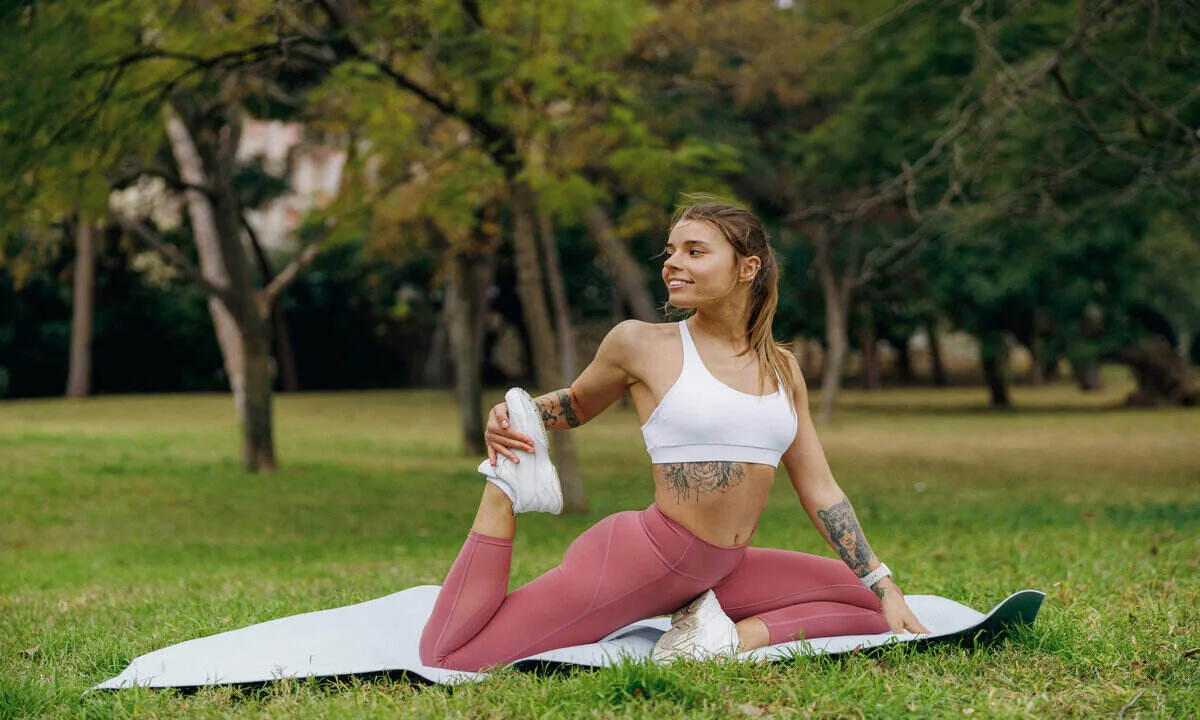
Here is a beginner-friendly routine that fits most schedules. Adjust as needed.
Daily (15 minutes total):
- 5 minutes: walk or mobility
- 5 minutes: strength (push-ups, squats, lunges, band rows)
- 5 minutes: prep something that makes tomorrow easier (water bottle, snack, workout clothes)
Three times per week:
- Add 10 to 20 minutes of steady movement you enjoy
Once per week:
- Plan two easy meals
- Restock two go-to snacks
- Schedule one recovery activity
What To Do When You Fall Off Track
Falling off is normal. The skill is restarting quickly.
Use the 48-hour reset:
- Do the smallest version of the habit today
- Do it again tomorrow
- Only then decide if you want to build it up
This aligns with widely recommended behavior-change guidance: plan, start small, and return to the routine after setbacks.
What To Do Next
Pick one habit from each category and commit to it for 14 days:
- Movement: 10-minute walk after lunch
- Food: add one fruit or vegetable to one meal
- Sleep: 20-minute wind-down with your phone across the room
Then use these questions to choose your next upgrade:
- What feels easiest to repeat?
- What creates the biggest ripple effect in my day?
- What is getting in the way, and how can I remove one obstacle?
If you want a weekend that makes healthy habits feel fun again, consider building your reset around a community experience. Runningman Festival (Sept. 18 to 20, 2026, in Rome, Georgia) is designed around movement, recovery, and connection, with a flexible choose-your-own-distance race format.
Get your tickets and enjoy getting active with friends!
FAQ About Healthy Habits

What Are The Best Healthy Lifestyle Habits To Start With?
Start with one habit each for movement, food, and sleep, and keep them manageable on busy days. Consistency matters more than intensity early on.
How Long Does It Take For Healthy Habits To Stick?
It varies by the person and the habit. A practical approach is to commit to a tiny version for 14 days, then build slowly once it feels automatic.
How Many Steps A Day Do You Need To Be Healthy?
There is no single perfect number for everyone. Choose a step goal you can hit consistently, then increase gradually as your baseline feels easy.
What Is A Simple Healthy Lifestyle Routine For Beginners?
A simple routine is a short daily walk, one meal upgrade per day, and a basic wind-down before bed. Build from there after two consistent weeks.
How Can You Be Healthy If You Have No Time?
Shrink the habit until it fits: 5 to 10 minutes of movement, a simple grocery “default list,” and a short sleep routine. The goal needs to be repeatable, not perfect.
What Are Some Healthy Lifestyle Changes That Are Realistic Long Term?
Realistic changes are those you can repeat without constant motivation, such as scheduled walks, simple meal patterns, and consistent sleep timing.
How Do You Make Healthy Eating Easier Without Dieting?
Use a “one-upgrade” rule: add a vegetable, protein, or fiber-rich option to a meal you already eat. This avoids all-or-nothing thinking.
What Is Habit Stacking And Why Does It Work?
Habit stacking means attaching a new habit to an existing routine, like stretching after brushing your teeth. It works because the existing routine becomes your reminder.


