

If you run, hike, train, or just want to feel stronger during hard efforts, VO2 max is one of the most useful fitness markers to understand.
It tells you how well your body can take in oxygen, move it where it needs to go, and use it to create energy during tough exercise. That matters whether you are building toward your first 5K or training for a longer goal.
For the Runningman Festival community, the VO2 max is important because endurance is not only about grit. It is also about how efficiently your heart, lungs, blood, and muscles work together when the effort rises.
What Does “VO2 Max” Mean?

VO2 max stands for maximal oxygen uptake. It is the highest rate at which your body can use oxygen during intense exercise.
That number is usually written as mL/kg/min (milliliters of oxygen per kilogram of body weight per minute). The higher the number, the more oxygen your body can use to make energy during demanding efforts. (Cleveland Clinic, 2026; Harvard Health Publishing, 2024).
Why VO2 Max Is Important
VO2 max reflects your aerobic fitness. A higher VO2 max is linked to better cardiorespiratory fitness, and greater fitness is associated with lower health risks and better long-term function.
What VO2 Max Can Tell You
- How strong your aerobic engine is right now
- How well your current training is working
- Whether your easy pace and hard pace are improving
- How your fitness compares with people of a similar age and sex
- Whether your training needs more volume, more intensity, or more recovery
What VO2 Max Cannot Tell You
- Your race result on its own
- Your running economy
- Your fueling habits
- Whether your training plan is balanced enough to stay healthy
How to Check Your VO2 Max

There are three common ways to measure VO2 max, each with different levels of accuracy.
1. Lab Testing
This is the gold standard. You wear a mask while walking, running, or cycling as the test gets harder until you reach maximum effort. The equipment directly measures oxygen use and carbon dioxide output.
Best for:
- People who want the most accurate result
- Athletes building a structured training plan
- Anyone who wants a true baseline
2. Field Tests
A 12-minute run, shuttle run, or similar protocol can estimate VO2 max without lab equipment. These methods are useful but less precise and influenced by pacing, terrain, weather, and fatigue.
Best for:
- Runners who want a low-cost check
- Group training environments
- Tracking progress every few months
3. Fitness Watches and Apps
Many wearables estimate VO2 max from heart rate, pace, grade, and personal data. These can be useful for trend analysis, especially if you compare your score over time under similar conditions. They are best used for tracking trends over time.
Best for:
- Everyday tracking
- Spotting long-term changes
- Keeping training simple and consistent
Use Our Calculator
Use this quick calculator to estimate your VO2 max from a 1.5-mile run. It is not as accurate as lab testing, but it is a simple way to get a useful benchmark and track your progress over time.
Estimate Your VO2 Max
Want a quick benchmark? Enter your age, sex, and your 1.5-mile time to get an estimated VO2 max score.
This is best used as a tool for estimating, not a clinical measurement.
Use your best recent 1.5-mile effort on a flat route or track.
Your estimated VO2 max is:
— mL/kg/min
This calculator provides an estimate, not a lab-measured result. Weather, pacing, terrain, and fatigue can all affect your score.
What Is a Good VO2 Max Score?

There is no single “good” VO2 max for everyone. Your number only makes sense when compared with the correct age and sex range. VO2 max also tends to decline after age 30, although regular training can slow that decline. (Cleveland Clinic, 2026; Luen, 2026).
Average VO2 Max by Age
Below are example average bands from ACSM-based reference charts. These are useful for context, not judgment. (Luen, 2026).
Men
- 20 to 29: 36.5 to 42.4
- 30 to 39: 35.5 to 40.9
- 40 to 49: 33.6 to 38.9
- 50 to 59: 30.2 to 35.7
- 60 to 69: 26.1 to 32.2
Women
- 20 to 29: 29.0 to 32.9
- 30 to 39: 27.0 to 31.4
- 40 to 49: 24.5 to 28.9
- 50 to 59: 22.8 to 26.9
- 60 to 69: 20.2 to 24.4
If your score sits below those ranges, don’t panic. A lower starting point often means you have plenty of room to improve. If your score is already above average, the goal may be to maintain it while building durability and race-specific fitness.
How to Improve Your VO2 Max
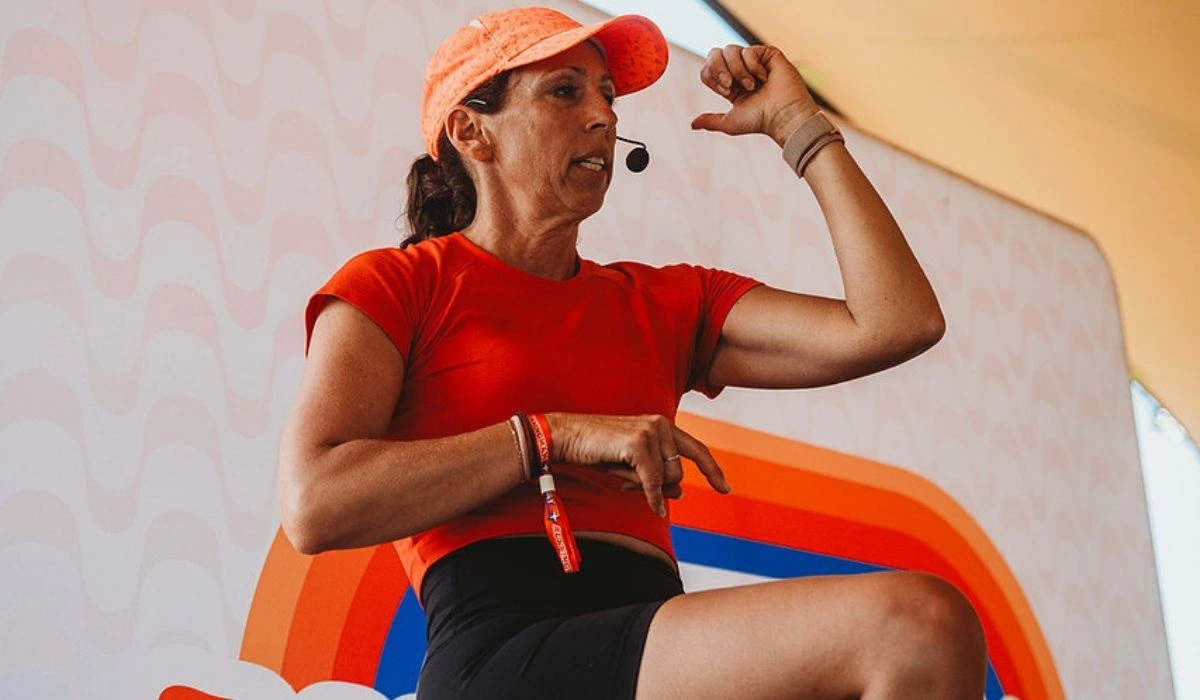
The biggest gains usually come from doing the basics well, then layering intensity on top.
Build a Bigger Aerobic Base
Easy and moderate aerobic work improves how your body delivers and uses oxygen. If you are newer to training, this may be enough to improve VO2 max on its own.
What that can look like:
- Brisk walking
- Easy running
- Cycling
- Swimming
- Hiking
- Rowing
Add Hard Efforts on Purpose
If you already train regularly, interval training can help raise your VO2 max. Research published in 2025 found that traditional 3-minute VO2 max intervals created more time above 90% VO2 max than intensified 30-second intervals in trained runners. A mix of moderate and high-intensity work supports gains while reducing injury risk. (Fleckenstein et al., 2025; Cleveland Clinic, 2026).
Practical options:
- Hill repeats
- Hard intervals with full recovery
- Tempo work that builds control before speed
- One quality session, then reassess, instead of stacking hard days
Follow the Weekly Basics
Adults should get at least 150 minutes of moderate-intensity activity each week, or 75 minutes of vigorous activity, plus muscle-strengthening work on 2 days each week. (CDC, 2023).
Do Not Ignore Recovery
Sleep, nutrition, hydration, and stress all shape how well your body adapts. You don’t improve during the hardest rep. You improve when your body has enough support to absorb the work.
How Long Does It Take to Boost VO2 Max?

That depends on your starting point, training history, and consistency.
If you are new to aerobic training, improvements can come quickly. Cleveland Clinic notes that a 10% to 15% improvement in a few months is realistic for people just starting or meaningfully expanding their workout routine. More experienced runners may see slower gains, but small improvements still matter. (Cleveland Clinic, 2026).
What to Do Next if You Want to Improve Your VO2 Max
Start simple. You don’t need advanced testing to begin improving your VO2 max.
Use this checklist instead:
- Pick one main aerobic activity you enjoy
- Build steady weekly consistency before chasing speed
- Add one harder workout only after your base feels stable
- Track one benchmark, such as pace, heart rate, or a repeat field test
- Recheck your VO2 max using the same method each time
- Talk to a qualified professional if you have health concerns, are new to vigorous exercise, or notice unusual symptoms during training
Why This Matters for the Runningman Festival
The Runningman Festival brings together movement, challenge, and community. If you are training for a race or want to feel stronger on race day, improving your VO2 max can help you perform with more confidence.
Better aerobic fitness can make long efforts feel steadier, improve recovery between surges, and help you pace more consistently on race day. That’s a win, whether you are chasing a personal best or just there to enjoy the experience!
Get your pass today, and test out that VO2 max over a fun-packed weekend.
References
CDC 2023, ‘Adult Activity: An Overview’, Centers for Disease Control and Prevention, 20 December, viewed 14 April 2026, https://www.cdc.gov/physical-activity-basics/guidelines/adults.html.
Cleveland Clinic 2026, ‘VO2 Max: How To Measure and Improve It’, Health Essentials, 8 April, viewed 14 April 2026, https://health.clevelandclinic.org/what-is-vo2-max-and-how-to-calculate-it.
Fleckenstein, D, Braunstein, H & Walter, N 2025, ‘Faster intervals, faster recoveries: intensified short VO2max running intervals are inferior to traditional long intervals in terms of time spent above 90% VO2max’, Frontiers in Sports and Active Living, viewed 14 April 2026, https://pubmed.ncbi.nlm.nih.gov/39835194/.
Harvard Health Publishing 2024, ‘VO2 max: What is it and how can you improve it?’, Harvard Medical School, viewed 14 April 2026, https://www.health.harvard.edu/healthy-aging-and-longevity/vo2-max-what-is-it-and-how-can-you-improve-it.
Luen 2026, ‘VO2 Max by Age and Gender’, viewed 14 April 2026, https://luen.app/learn/vo2-max-by-age-and-gender/.


