

At Kingston Downs last weekend, people ran, stretched, plunged into cold water, breathed through workshops, and danced across three days. We saw one of fitness’s oldest truths: people push further together than they push alone.
Group fitness works, and it’s no mystery why. Researchers have studied the mechanics for decades, and the findings are equal parts funny and deeply human. If the class you dreaded turned out to be easier than the solo workout you skipped, keep reading.
What Counts as Group Fitness
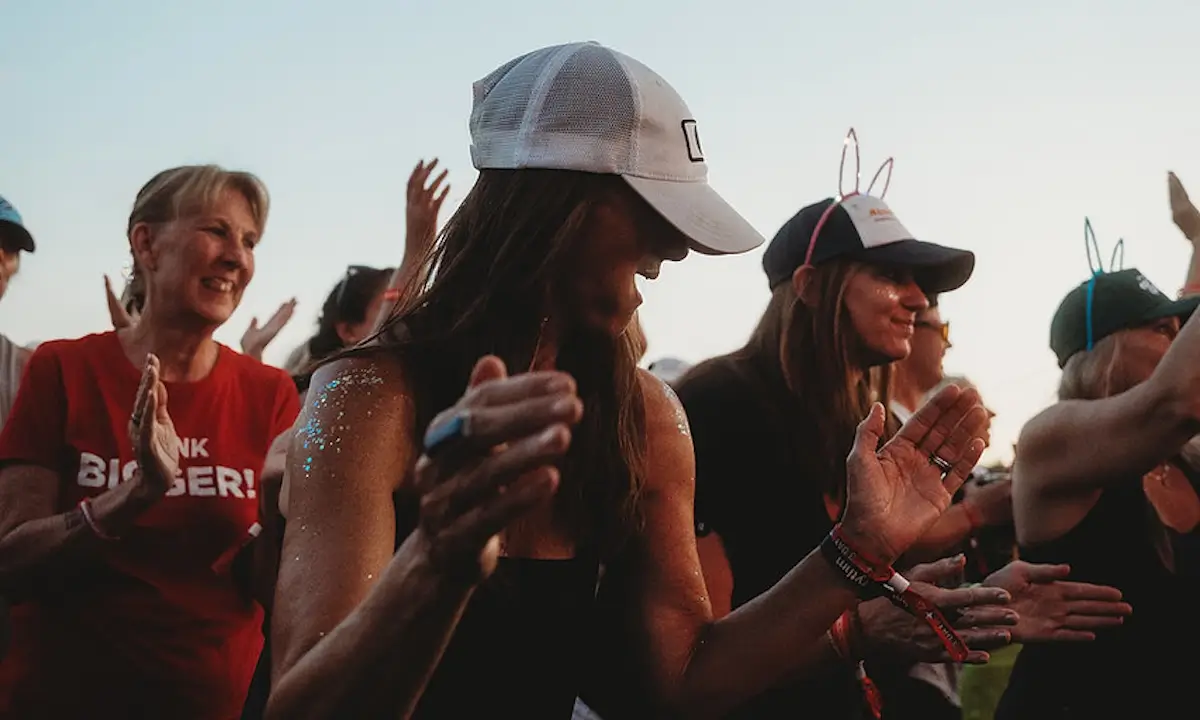
Group fitness is any structured movement that’s done alongside other people. A Tuesday loop with a run club, a yoga class, a park bootcamp, a spin studio, a hiking group, or thousands of people picking their own distance at a festival. The exact format isn’t as important as the basics: movement + company.
It could be three people or 3,000; the research behind group exercise applies just as well, no matter the size. Your fitness level also doesn’t matter. Beginners, walkers, and anyone out of practice get the same benefits, arguably larger ones, since group effects do their best work on the days you would otherwise skip entirely.
Why Training Together Works
Exercise scientists keep asking the same question: why do people stick with group workouts better? Three consistent effects keep showing up in the answer.
Accountability and Showing Up
Getting out the door is the hardest rep in any workout, and groups make sure you do it. Once someone is expecting you, skipping stops being a quiet argument with your alarm clock and turns into a small social event. Harvard Health research points to the same conclusion again and again: social support ranks among the strongest predictors of whether a fitness habit lasts, and scheduled plans with other people are what turn that support into structure.
None of this demands willpower, and that is exactly the point. The group lends you the willpower, so all you have to bring is your shoes.
The Effort Effect: You Push Harder in Groups
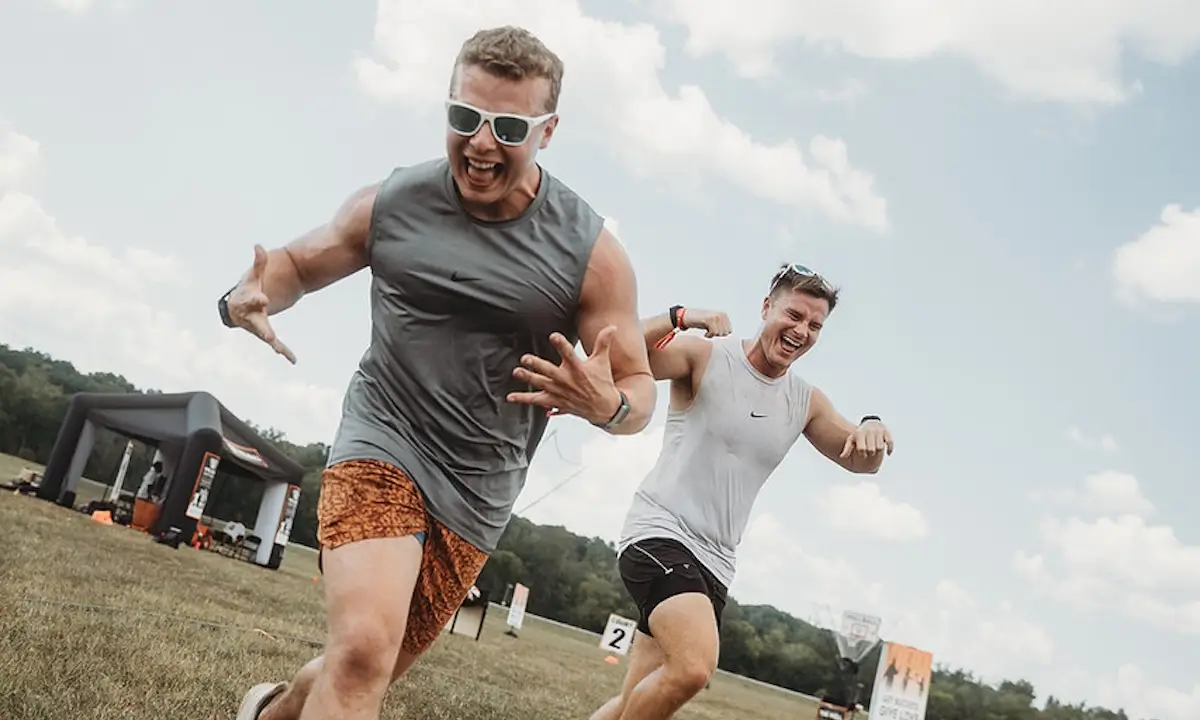
People work harder around others than they do alone, often without realizing it. Sports psychologists have tracked this pattern for over a hundred years, from cyclists pedaling faster in pairs to gym members lasting longer next to a partner.
Studies on what researchers call the Köhler effect, first documented by Otto Köhler and later expanded by Kerr and Hertel, found that training beside someone slightly fitter measurably extends how long a person keeps going.
There is a downside, too. Groups can also drag beginners along faster than they should go, which is exactly how eager newcomers end up sore for a week straight. A well-run group should pace to its slowest member, and a smart beginner admits that is them. Effort works best as a gentle nudge, never as a tow rope.
Enjoyment and Adherence
The real motivator behind group fitness is simply that it’s more fun, and fun is a major variable. Enjoyment predicts commitment in exercise research: people keep doing what they actually like. Add the conversation, the shared jokes, and the post-workout coffee, and the session becomes part of your social life instead of a task.
The CDC makes this same practical case, urging people toward activities they enjoy. Movement you look forward to is movement still happening six months later.
Group Fitness at Festival Scale
So what happens when the group dial gets turned all the way up?
We saw it again firsthand. Runningman 2026 wrapped last weekend: three days of running, sauna sessions, cold plunges, breathwork, and music at Kingston Downs in Rome, Georgia. Runners tackled The Loop, choosing their own distance anywhere from 5K to 50K, and every mechanism described above showed up the moment the start line filled in.
First-time racers paced off total strangers who turned into friends by the second loop. Walkers finished distances they had never planned on, because stopping felt premature with a crowd still moving. The sauna village turned recovery, usually the loneliest stretch of any fitness routine, into the most social hour of the whole weekend.
Scenes from Runningman 2026
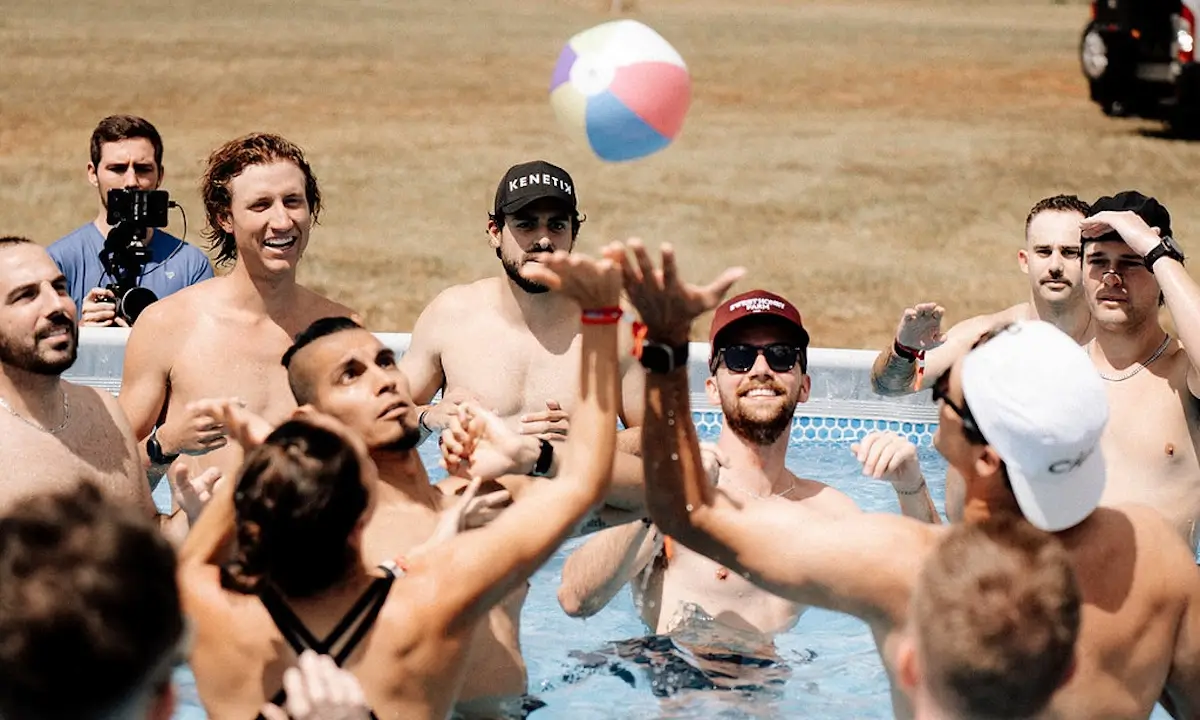
So what was Runningman 2026 like? Photos capture this better than words can. Browse the full photo gallery; fair warning, it may leave you wanting a spot in the 2027 pictures.
How to Find Your Fitness Community
You don’t need a festival to start. Group fitness exists at every scale, and most of it costs nothing.
- Run clubs: nearly every town has a few, most welcome every pace, and the awkward first session fades fast.
- Classes: yoga, spin, bootcamps, HIIT. Paying for a scheduled slot buys accountability with a receipt attached.
- Community events: weekly timed park runs and charity 5Ks give group fitness a start line, ideal for people who like a bit of occasion.
- One reliable friend: the smallest group that still works. Two people with a standing Tuesday date will outlast most gym memberships.
Choose whichever version you would genuinely enjoy. Per the research above, enjoyment is the feature, not an extra, so start smaller than your ambition wants. A note for anyone at Kingston Downs last weekend now feeling the post-festival slump: this is the moment to bank that momentum. The people you ran loops beside live somewhere nearby. That group chat born in the sauna still has legs.
Turn one of those connections into a standing weekly session in the next two weeks, while the memory is still loud, and next September you will show up fitter than you left this year. The festival is the celebration. The Tuesday group is the practice.
Want the festival-sized version again? The Runningman experience returns in 2027. Join the waitlist to hear first when passes open.
FAQs
Is Group Fitness Better Than Working Out Alone?
Neither wins universally, but adherence research favors groups for most people, since accountability, effort, and enjoyment all tend to climb with company. The best program is still whatever you will actually keep doing, and for plenty of us, other people are what make that happen.
I’m Unfit and Self-Conscious. Won’t a Group Make It Worse?
That fear is common, and the reality is kinder than you might expect. Beginner-friendly groups exist everywhere, nobody is tracking your pace, and most people say the self-consciousness fades within a session or two. Start with a group that explicitly welcomes all levels and tell the organizer you are new. They have heard it before.
What if There Are No Groups Near Me?
Start with one other person, a friend, a coworker, or a neighbor with a dog that needs walking. Two people on a shared schedule already capture most of the accountability benefit. Online communities and virtual challenges can supply the social piece while you build a local one.
Does a Festival Really Count as Group Fitness?
It is group fitness with a sound system attached. The same forces (a date on the calendar, the crowd’s pull on effort, and enjoyment shaping the memory you keep) all operate at festival scale, which is really the whole point of building one.
Sources
- Centers for Disease Control and Prevention (CDC) (2025) About Physical Activity. Available at: https://www.cdc.gov/physicalactivity/ (Accessed 24 August 2026).
- Corliss, J. (2024) Need more inspiration to exercise? Don’t go it alone. Harvard Health Publishing. Available at: https://www.health.harvard.edu/heart-health/need-more-inspiration-to-exercise-dont-go-it-alone (Accessed 24 August 2026).
- Kerr, N.L. and Hertel, G. (2011) The Köhler Group Motivation Gain: How to Motivate the ‘Weak Links’ in a Group. Social and Personality Psychology Compass, 5(1), pp. 43–55. Available at: https://compass.onlinelibrary.wiley.com/doi/abs/10.1111/j.1751-9004.2010.00333.x (Accessed 24 August 2026).


