

There’s a particular feeling that comes with signing up for your first running event: part excitement, part low-grade dread. You’ve paid the entry fee, told a few people, so backing out quietly isn’t really an option, and now there’s a date on the calendar your legs are apparently responsible for.
Take a breath. Thousands of people finish their first event every weekend. Most go a little slower than they’d hoped. Nearly all of them end up happier than they expected.
This guide covers the whole thing: choosing the right event, your last four weeks of prep, race week logistics, the morning itself, and what to do once you’ve crossed the line.
Choosing the Right First Event
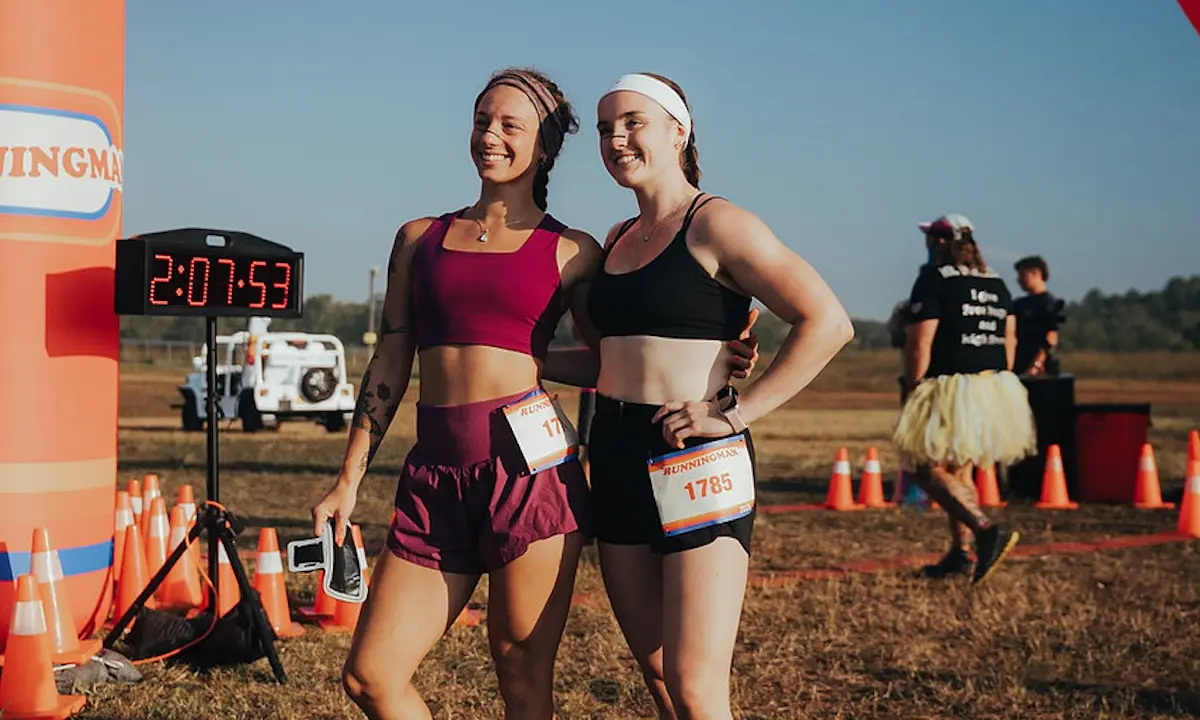
If you haven’t picked an event yet, take your time. The format shapes the entire day. A big city race with corrals and strict cutoffs is a very different experience from a relaxed community 5K.
For a first event, look for three things: a distance you can genuinely cover in your current shape, walking included; a generous time limit; and an atmosphere that celebrates finishers, not just winners. Check the event’s FAQ page before signing up. If it talks warmly about walkers and first-timers, that’s a good sign.
Why Choose-Your-Distance Formats Suit Beginners
A newer style of event solves the biggest fear most beginners have: committing to a distance you’re not sure you can finish. At Runningman, everyone starts together, and you choose any distance from a 5K up to a 50K, with a full 8 hours to cover it on a repeating loop.
Feel great after your 5K? Keep going. Feel done? You’re done, and you still get a medal for the distance you covered.
This kind of format removes the pass-fail pressure entirely. You can’t really blow up your race, because the goal adjusts to the day you’re actually having. If a fixed distance is what’s kept you from entering something, a choose-your-distance event is about as friendly a first finish line as you’ll find.
Four Weeks Out: Simple Preparation
Four weeks is plenty of time to show up feeling ready, as long as you don’t overcomplicate it. These weeks aren’t about becoming a different athlete. They’re about teaching your body that moving for 30 to 60 minutes is just a normal Tuesday.
A solid pattern is three sessions a week: two shorter, easy ones and one longer weekend outing that grows a little each time. Lean on walk-run intervals whenever you need them.
Updated guidance from the American College of Sports Medicine still comes down to one word: gradually. The classic rookie mistake is cramming a month of skipped training into the final two weeks. Skip that instinct. Whatever shape you’re in three or four days out is the shape you’ll race in, and cramming just adds fatigue on top.
Make the final week your lightest. Shorter sessions, more sleep, nothing new.
If You Have Not Trained at All

It happens, and you’ve still got options. If your event is short or uses a choose-your-distance format, plan on walking most of it with a few easy jogging stretches mixed in, and give yourself full permission to enjoy that version of the day. Brisk walking counts as real exercise, the crowd cheers just as hard at every pace, and a finish is a finish no matter how you get there.
What you shouldn’t do is try to run an ambitious distance with zero prep behind it. That’s the fastest way to turn a first event into a last one. Scale your goal to match reality, then ride that momentum into proper training for the next one. Our free training plans are ready whenever you are.
Race Week: Logistics Checklist
Most of the stress around a first event has nothing to do with the actual running. It’s logistics. Sort these out early in the week and your weekend gets a lot calmer:
- Read the athlete guide. Start time, parking, packet pickup, gear rules: it’s probably all in there already.
- Grab your bib early if the event offers pickup the day before. Race-morning lines are where calm goes to die.
- Plan your travel with extra buffer built in. Ninety minutes early feels like overkill until the lot is a muddy field and the bathroom line is 40 people deep.
- Lay your kit out the night before: shoes, socks, outfit, bib, safety pins, anything you’ll carry. Nothing new on race day. Wear what you’ve already trained in.
- Check the forecast and plan layers you can peel off as you warm up.
- Sort your breakfast now, not at 6 a.m. tomorrow. More on that below.
Race-Day Morning, Step by Step
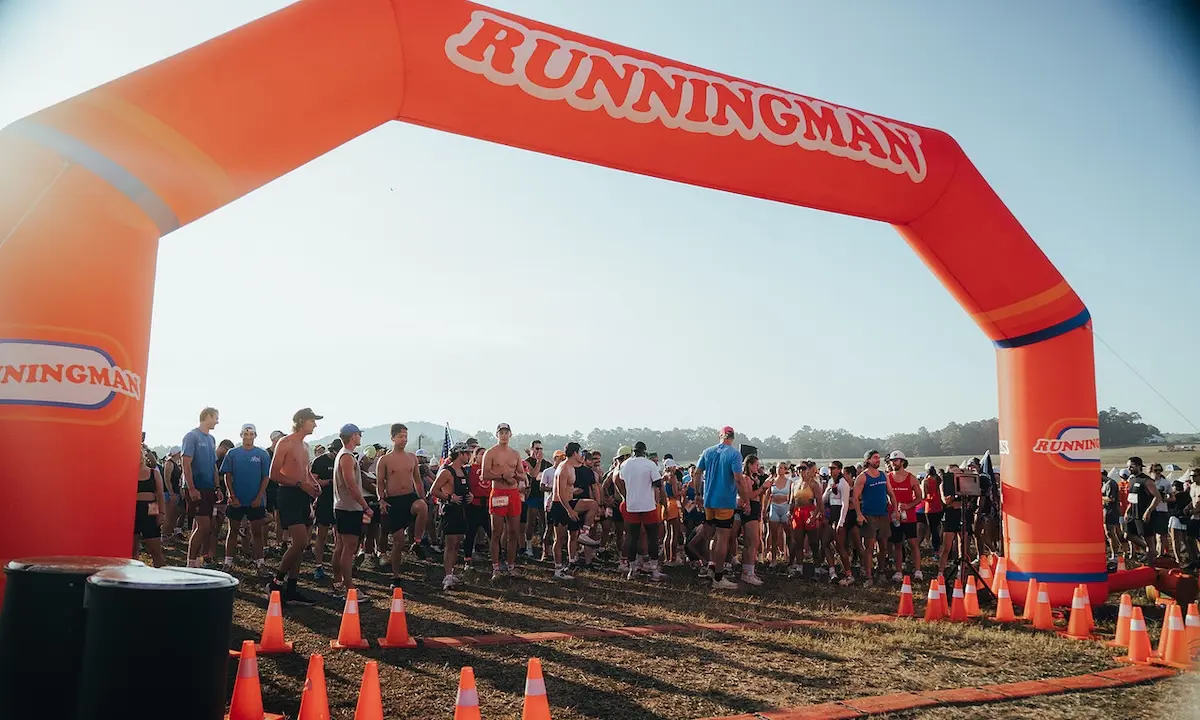
Wake up earlier than feels strictly necessary. Eat the breakfast you already planned. Get to the venue with enough time to collect yourself, deal with the bathroom line (it’s always real), and jog or walk easy for five minutes near the start.
Then find your honest place in the starting crowd, toward the back or middle, not up front. That’s not modesty; it’s strategy. Starting among faster runners will drag you out at their pace, and the first mile of your first event is the easiest place to wreck the rest.
When the gun goes off, it’ll feel electric. Nobody quite prepares you for that part, so take a second to enjoy it.
What to Eat
Keep it familiar, and a little boring. Easy carbohydrates two to three hours before the start (toast, oatmeal, a banana, whatever’s already worked before your training runs) is the standard move. Race morning is not the time to test how your stomach feels about something new! Sip water instead of chugging it. For more on fueling, including longer efforts, check our guide to what to eat before a race.
Pacing Your First Event
Here’s the only pacing advice a first-timer really needs: go out slower than feels right, hold that through the first half, then see what’s left in the tank.
The crowd’s energy will try to drag you out too fast. If you can fight the temptation to go faster for the first ten minutes, by the time you get to the second half of your race, you’ll be passing people instead of getting passed, which does wonders for morale.
And if you need to pull back? Walking is a strategy, not a failure. A planned break, say a minute of walking every five minutes, gets plenty of first-timers to a stronger finish than trying to run every single step.
If it’s a hot day, Mayo Clinic’s guidance on staying hydrated in extreme heat applies just as much on race day: dial the effort back and treat every water stop as mandatory.
After the Finish Line: Recovery and What’s Next
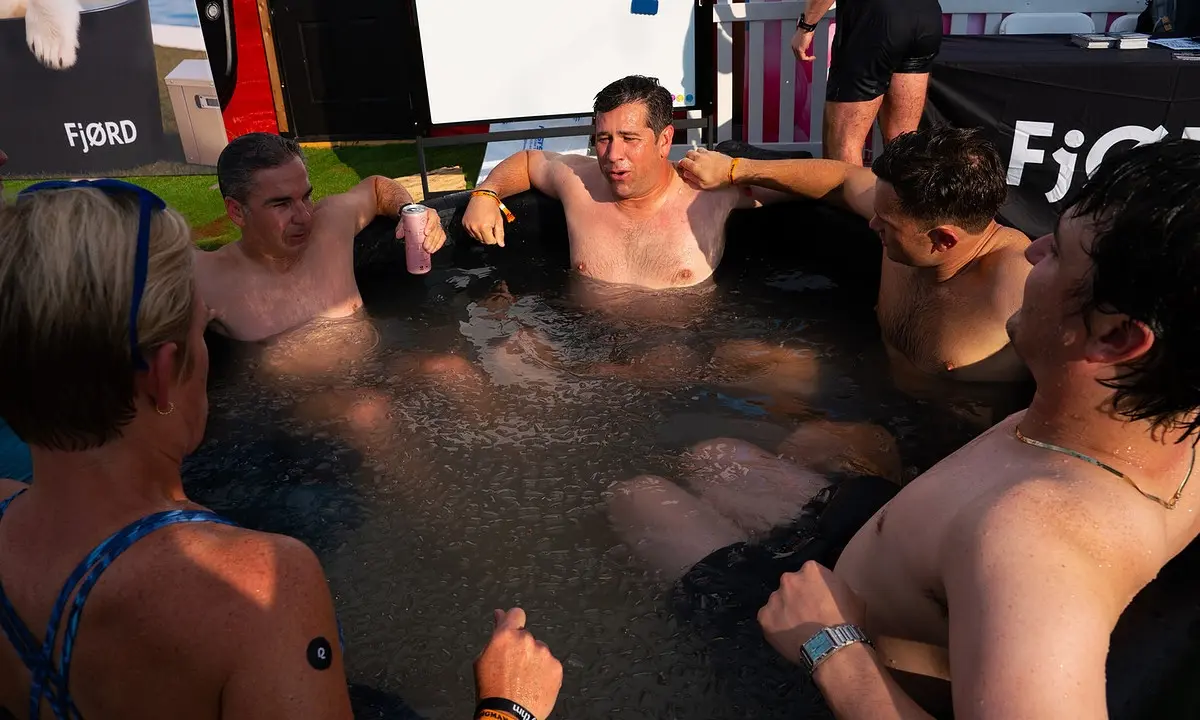
Grab your medal. Get the photo. Eat something within the hour, keep moving gently instead of collapsing into a chair, and drink some water. Your legs will grumble for a day or two, which is perfectly normal and can also be eased a bit with a simple walk around the block.
Then comes the real question: what’s next?
There’s a window, somewhere between the finish-line glow and the following weekend, where you start quietly wondering what else you could pull off. Use it. Sign up for the next thing while the feeling’s still fresh. Whatever you pick, you’re no longer someone who’s thinking about their first running event. You’ve done it.
Fancy turning the next one into a whole weekend? Runningman lands September 18 to 20 at Kingston Downs in Rome, Georgia, built for exactly this moment. Get tickets, and we’ll save you a spot at the start line. Coming to Runningman for your first event specifically? Our guide to preparing for Runningman covers the festival details.
FAQs
What if I Finish Last?
Somebody has to, and they usually get one of the loudest cheers of the day. In practice, fields are varied enough that you’re unlikely to be last, but even if you are, you finished a running event, which is more than most people watching can say. Generous time limits and choose-your-distance formats make this a total non-issue anyway.
Is It OK To Walk During the Event?
Completely. Walk breaks are a recognized strategy at every level, and a large share of participants at most events mix walking and running. Nobody out there is judging you. They’re too busy managing their own race.
What Should I Wear?
Whatever you’ve already trained in. Dress for the second mile, not the first, so you should feel slightly cool at the start line because you’ll warm up fast. Skip brand-new shoes or clothes; that’s how blisters and chafing crash your big day.
How Early Should I Arrive?
Sixty to ninety minutes before the start. That covers parking, bib pickup if you missed it earlier, the bathroom line, and a minute to just stand there and let it sink in that you’re actually doing this.
Sources
- American College of Sports Medicine (2026) Resistance Training Guidelines Update. Available at: https://acsm.org/resistance-training-guidelines-update-2026/ (Accessed: 21 August 2026).
- Mayo Clinic (n.d.) Staying Hydrated and Healthy During Extreme Heat. Available at: https://sportsmedicine.mayoclinic.org/news/staying-hydrated-healthy-during-extreme-heat/ (Accessed: 21 August 2026).


